
Is Sri Lanka safe for travel?
No destination can be guaranteed completely safe. Check your government’s current advisory, local authority notices and the conditions on your intended route before booking and again before travelling. Conditions can change quickly, and official advice may vary between countries or regions.
Reviewed 18 November 2026. At the time of review, Australia’s Smartraveller advised a high degree of caution and the US State Department listed increased caution. The UK FCDO provided current warnings on weather and travel disruption. Follow the current source for your own country; these examples are a snapshot, not a live warning service.
Use the advice below to prepare, then make decisions for your group and travel dates. A private driver can help with agreed road logistics, but hiring a vehicle or guide does not remove every travel risk or replace official instructions.
Where to find Sri Lanka travel advice for your country
Before leaving, check the advisory issued for your own nationality, its regional pages, entry requirements, health information and any transit-country advice. Many governments offer optional updates or traveller registration. Read the source itself rather than relying on a search-result snippet, because its last update and its current status can differ.
- United Kingdom: FCDO Sri Lanka travel advice
- Australia: Smartraveller Sri Lanka advice
- United States: State Department Sri Lanka advisory
- Canada: Travel advice and advisories for Sri Lanka
- Germany: Auswärtiges Amt travel and safety advice
- France: France Diplomatie Sri Lanka advice
- Italy: Viaggiare Sicuri Sri Lanka profile
- Poland: government travel information for Sri Lanka
- Netherlands: government travel advice for Sri Lanka
- Switzerland: FDFA travel advice for Sri Lanka
- Sweden: Sweden Abroad travel information
- Spain: government travel recommendations for Sri Lanka
- India: Ministry of External Affairs visa information for Indian nationals; check the High Commission of India in Colombo for current notices.
For local hazards, consult Sri Lanka’s Department of Meteorology and Disaster Management Centre, and follow local authority instructions. Ask your hotel, airline or transport provider about the current situation on your route, but give official closures and instructions priority.
Is it safe to travel to Sri Lanka right now?
The answer can change between the day you plan and the day you travel. Look at your government’s latest advisory and its regional warnings, then check local weather, transport notices and any travel alert for the countries where you connect. A cached page, the experience of another traveller or an old social-media post may describe a different situation.
At our 18 November 2026 review, the UK travel advisory highlighted potential flight disruption linked to events in the Middle East and fuel-related transport disruption as well as severe weather. Such situations can change quickly. Check the current advisory for your own nationality, your airline’s flight status and the transport operator’s plans before departure and during your trip.
If the route is affected by severe weather, unrest or another disruption, contact your accommodation and airline, review your insurance conditions and follow the official advice applicable to you. Decide whether to change dates, adjust the route or postpone based on reliable current information and your own circumstances. Keep watching for changes during the trip.
Weather, flooding and landslides
Sri Lanka’s conditions differ by coast, altitude and month. Heavy rain may affect roads, railways, trails and boat trips, and landslide or flood risk can persist after rainfall. Check forecasts and official warnings for each stop, especially before a hill-country drive, a hike, or a coastal outing. A clear forecast for Colombo does not describe the whole island.
Leave room to change the order of stops or remain somewhere longer if a route is affected. Do not enter floodwater, drive through a closure or approach a landslide for photographs. If your accommodation advises evacuation or an authority closes a road, follow those directions rather than a map app’s shortest route.
Our Sri Lanka weather and best season guide explains broad regional patterns. Seasons are useful for planning, not a promise of safe sea conditions or dry weather on a particular day.
Road travel and private-driver safety
Road conditions, traffic, lighting, weather and driving standards can vary. Allow realistic travel time, ask about rest stops and avoid forcing a long journey into a tight schedule. Where possible, discuss daylight travel for longer unfamiliar routes and check road conditions if heavy rain has occurred.
When booking a private driver, explain your itinerary, group size, luggage and any mobility or child-seat requirements. Confirm the vehicle, pickup, agreed stops, working hours and costs in writing. Ask about the service provider’s licensing, insurance and how to contact them during a delay or change. A quote should set expectations; it cannot guarantee that a road remains open or that the journey will run to a fixed minute.
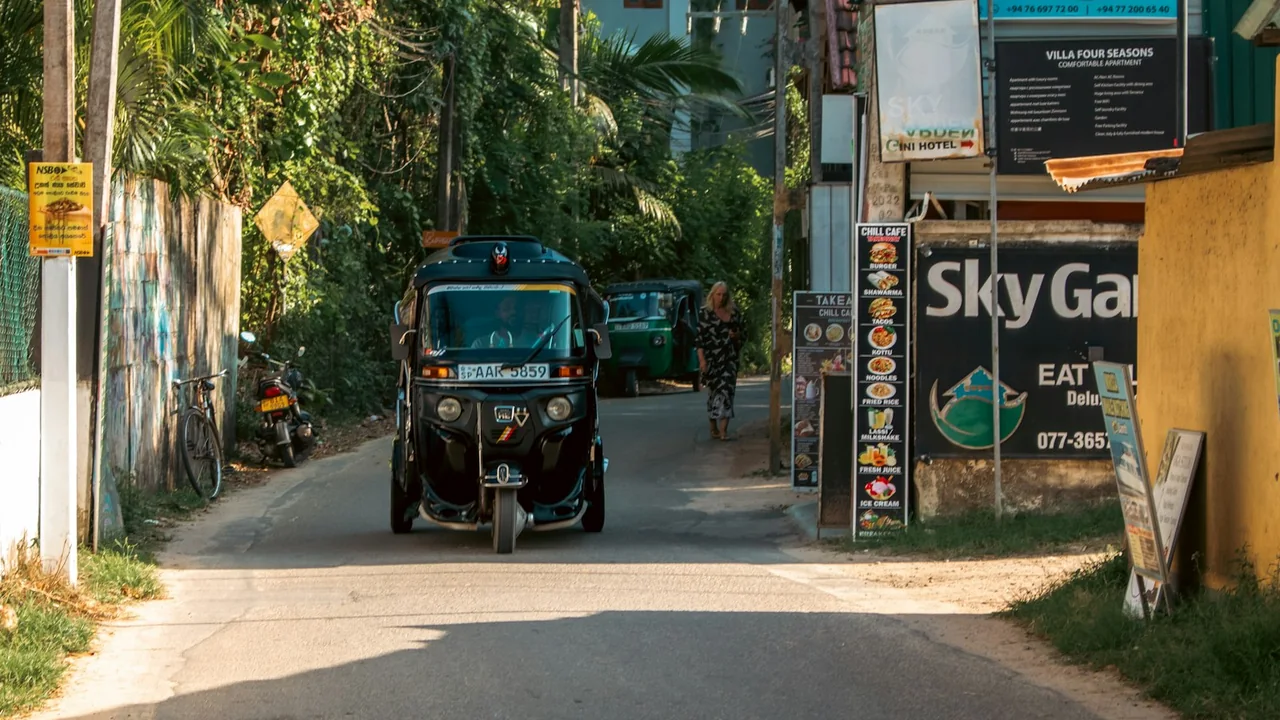
If self-driving is part of your plan, check the applicable Sri Lankan licence and permit rules, the rental agreement and insurance coverage before hiring. Your home licence alone may not be enough. If using a taxi or tuk-tuk, agree the fare or metering arrangement before departure and change plans if you have concerns about the vehicle or driver.
Swimming, boats and outdoor activities
Conditions at beaches can change with wind, waves and currents. The UK safety guidance notes that surf and rip tides can be dangerous. Ask locally about the specific beach and day, observe warnings, and do not assume a beach is safe just because it looks calm or other people are swimming.
For whale watching or another boat trip, check current weather and sailing arrangements, safety equipment, operator instructions and the welfare practices used around wildlife. A sighting is never guaranteed. If conditions are unsuitable, postpone or choose a different activity rather than pressuring an operator to depart.
When walking near waterfalls, cliffs, railways or steep viewpoints, use permitted paths and heed restrictions. Wear footwear suitable for the conditions and ask about access before setting out. Around Ella, rain and cloud can affect both trail conditions and visibility.
Train safety and disruption
Check current Sri Lanka Railways timetables, notices and any disruption before committing to a connection. A scheduled train time is not a guarantee against delays or weather-related closures. Our Sri Lanka train travel guide links to official timetable and booking resources and explains how to connect rail with a road itinerary.
Stay inside the train carriage while it is moving. Do not lean from doors or windows for a photograph. Keep valuables close, follow railway staff directions and use designated station areas. Be aware that a rail bridge is a working railway, not a pedestrian photo platform.
If a driver will meet you at a station, agree the exact station, contact method and what happens if the train is delayed. Tell the provider promptly when plans change. Tickets, vehicle waiting and any assistance fees should be confirmed separately in the written quotation.
Personal security and local awareness
Keep your passport, money and phone secure and maintain separate copies of important documents. Use hotel safes or other secure arrangements where appropriate, and know whom to contact if a document is lost. Be alert to theft or scams, and check bills or fares before paying.
Avoid demonstrations and large gatherings when advised by authorities; even a peaceful gathering can disrupt transport or change unexpectedly. Follow local instructions at checkpoints and avoid photographing restricted or sensitive places. Read the regional advice for areas you intend to visit, including any landmine warnings or access restrictions in northern and eastern areas.
Solo travellers and women may want to share their itinerary with a trusted contact, arrange verified transport, and check accommodation access after dark. Ask your government’s advice for the risks relevant to you and choose arrangements that feel appropriate for your group. If anything makes you uncomfortable, move to a safer place and seek help.
Health, insurance and medicines
Consult a qualified health professional or travel clinic sufficiently early about your personal needs, destination, activities, vaccination recommendations and any entry requirements. A website article cannot determine your medical needs. Insect-bite protection, drinking-water choices and food hygiene are practical topics to discuss; check current official guidance for your journey.
Choose travel insurance that covers your destinations, trip duration, planned activities, medical care and emergency transport where appropriate. Read exclusions and contact procedures before buying. If your plans change to include hiking, motorcycling, watersports or another activity, check that the policy covers it rather than assuming all activities are included.
Carry essential medicines in the way recommended by your clinician and airline, and check rules for bringing them through each country on your route. Keep enough supplies for your journey and ask your insurer how to obtain assistance if you need care away from home.
How to prepare for an emergency
Save the contact details of your accommodation, insurer, airline and local transport provider offline. Check your own government’s advisory for its current emergency numbers and consular contact details. Sri Lanka’s tourism assistance line is listed as 1912 in the UK travel advice; verify availability and the appropriate emergency service for the situation.
Know the route to a safe meeting point at your accommodation and ask about its emergency procedures, particularly when staying near the coast or in areas exposed to flooding. If officials issue an evacuation order, follow it. Share a basic itinerary and an update method with someone you trust at home.
If a flight, train or road is disrupted, contact the airline or operator directly and check whether your insurance requires notification before arranging alternatives. Keep receipts and confirmations when appropriate. Discuss changes to driver pickup or hotels as soon as you can; availability and any additional charges need confirmation.
A practical pre-trip checklist
- Read Sri Lanka’s entry rules and your country’s current travel advisory; recheck both close to departure.
- Confirm the actual passport, visa or ETA, flights, transit and first hotel. Our Sri Lanka travel visa guide links to the responsible authorities.
- Review insurance, health advice and any personal accessibility or medication needs.
- Check the weather and intended routes, and leave flexibility around long drives and train or flight connections.
- Agree your transport details and contacts in writing, including child seats or mobility needs where relevant.
- Save essential contacts, confirmations and an offline copy of your plans; tell a trusted person how to reach you.
For route ideas, compare our Sri Lanka itineraries, Mirissa guide and Ella guide. A Sri Lanka chauffeur or private driver can be requested for a route tailored to your group and the conditions at the time.
Frequently asked safety questions
Is Sri Lanka safe for solo female travellers?
Individual circumstances and local conditions differ. Consult your government’s advice for women travelling alone, choose transport and accommodation carefully, share your plans with a trusted person and follow local warnings. Australian advice notes that harassment and assault can occur, including for people travelling alone.
Can I travel during the monsoon?
Travellers visit throughout the year, but weather varies regionally and heavy rain may cause disruption. Check current forecasts, closures and official warnings and be ready to alter plans.
Is it safe to swim in Mirissa?
Sea conditions vary by location and day. Ask locally about currents and warnings, and do not enter the water if conditions are unsafe or you are uncertain.
Does hiring a driver guarantee a safe trip?
No provider can guarantee safety. Discuss vehicle, driver and insurance arrangements, allow time for the journey and follow official instructions when conditions change.
Where should I check travel advice?
Use your own government’s Sri Lanka advisory, Sri Lankan local authorities and the relevant airline or transport operator. The list above links to sources for our main visitor markets.
